Computational Essay Writing Mentorship
One-on-one mentorship taking a high school student from a first idea to a published computational essay in the Wolfram Language.
Overview
The Computational Essay Writing Mentorship is a one-on-one mentorship program that guides a high school student from a first idea to a finished computational essay in the Wolfram Language, published to the Wolfram Community. Most high school students never produce original research. This mentorship ends in a published essay of their own.
It is not a coding course. The computational essay is the medium: an intellectual story told through the collaboration of a human author and a computer, built from text, code, and computation in a single document. The topic is the student’s own, motivated by a question they already care about, and can come from a broad range of fields, including data analysis, mathematics, and the natural sciences.
Working towards one real essay, the student develops three core competencies (computational thinking, technical communication, and fluency in the Wolfram Language) and comes away with a tangible portfolio piece. The mentor, who has guided over 11 essays from drafting to publication, provides guidance and feedback, technical support, and instructional scaffolding at every stage; the student does the thinking, the coding, and the writing.
Undergraduate students are welcome to join our faculty-advised Computational Essay Workshops run through the Wolfram Computational Research Club at SUNY Korea.
To learn more about the pedagogical approach of this program, please refer to this article.
What a Computational Essay Looks Like
While a general introduction can be found in Stephen Wolfram’s writing, a computational essay is easiest to understand by reading one.
Excellent computational essays by high school students, from the Wolfram high school program, can be found on the Computational Thinking Initiatives website.
The following are essays written by the mentor and the subject advisors:
- Impact of parameter perturbation on the neural network performance — Junseo Lee. Wolfram Community, Staff Picks, July 11, 2024.
- Loss landscape geometry across the double descent curve — Junseo Lee. Wolfram Community, Staff Picks, January 10, 2026.
- Analyzing changes in the ideology of the Democratic and Republican party from 1900 to 2020 — Eugene Hwang. Wolfram Community, Staff Picks, July 11, 2024.
- Analyzing polysaccharide bonding in Cryptococcus neoformans — Sindhoora Raja. Wolfram Community, Staff Picks, July 11, 2024.
- Established and novel methods for protein analysis in Wolfram Language — Wolfram Education Programs. Wolfram Community, Staff Picks, February 4, 2025.
The computational essays that the mentor has guided can be found here, and the following are selected essays:
- TSVD and autoencoder for image restoration: a comparative study — Jaekyung Seol. Wolfram Community, Staff Picks, June 3, 2026.
Mentor Profile
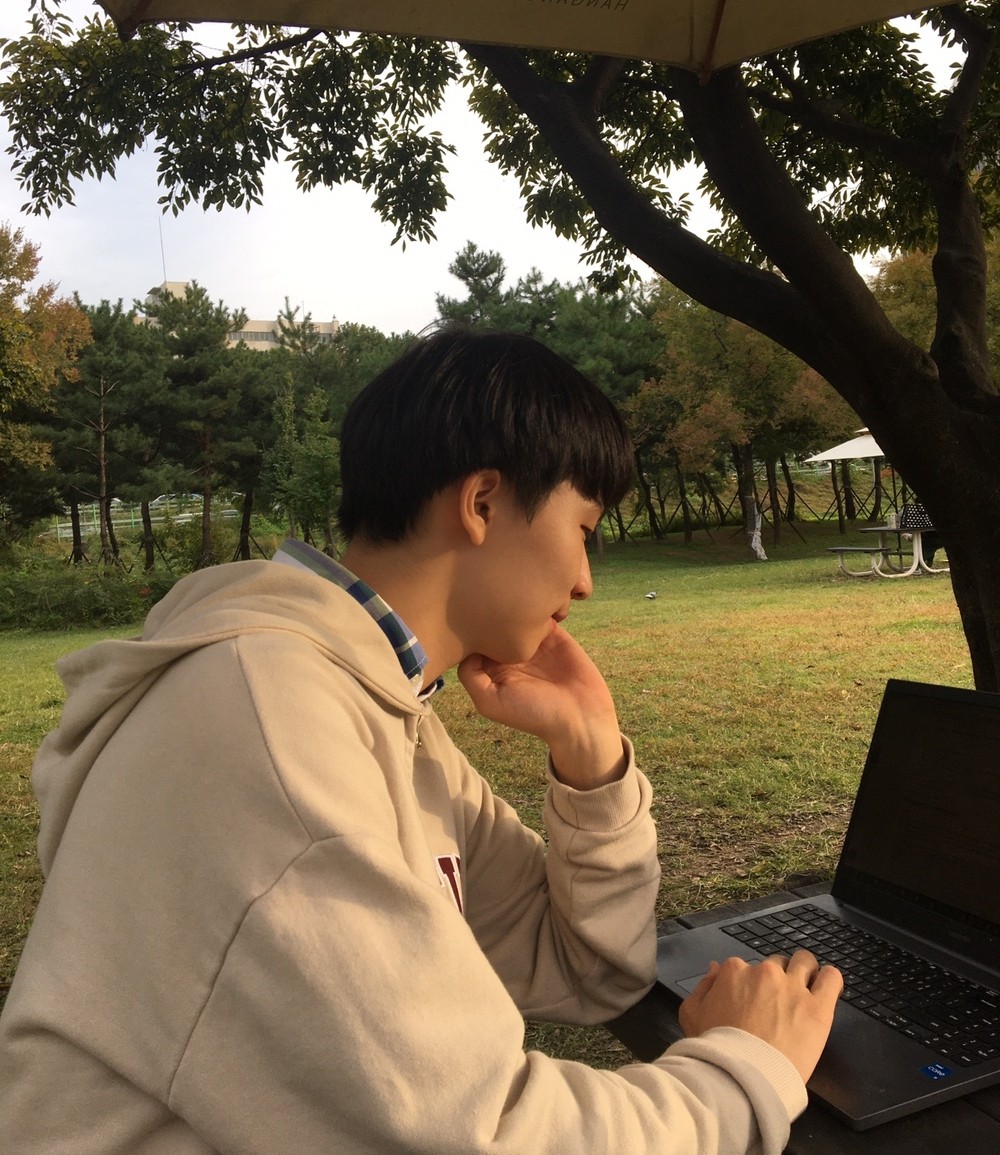
Junseo is a rising junior at Stony Brook University majoring in Applied Mathematics and Statistics. His interests sit where statistical theory meets applied questions in finance and machine learning, and he is currently researching multiple testing procedures for quantitative finance.
- Applied Mathematics and Statistics major at Stony Brook University
- Academic interests in statistics, data science, and quantitative finance
- Advises on data analysis and statistical methods
- Published multiple Wolfram Community Staff Pick computational essays, on topics including deep learning and data science
- Mentor at the Wolfram High School Summer Research Program (Boston, 2026); alumnus of the same program (2024)
- Representing Wolfram Technologies as a Wolfram Student Ambassador on and off campus
- Level 2 Certificate in Applied Expertise in Computational Research from Wolfram
- Founded and leads the Wolfram Computational Research Club at SUNY Korea, and has guided over 11 computational essays from drafting to publication
Subject Advisors
Subject advisors bring domain-specific expertise to the mentorship when a student’s project needs it. An advisor joins a session when a project falls within their field, and their roles include:
- Assess whether the research question is sound and well-posed;
- Point to the relevant concepts, methods, and sources, and review the assumptions and methodology;
- Identify misconceptions or errors, and check that the results are interpreted correctly and the conclusions hold up.
Where it helps, they also point students to the domain-specific Wolfram Language functions and curated data in their field. General Wolfram Language coaching, code implementation, and the writing remain the mentor’s responsibility, and the essay, code, and results remain the student’s own work.
Eugene is a rising junior at Carnegie Mellon University studying Information Systems and Artificial Intelligence. He first started programming through competitive programming in middle school. Now he mostly focuses on full-stack development and natural language processing research, although he still does programming competitions on the side.
- Information Systems and Artificial Intelligence major at Carnegie Mellon University
- Academic interests in computer science, natural language processing, and machine learning
- Advises on data structures and algorithms, topics in programming olympiads, and natural language processing
- Alumnus of the Wolfram High School Summer Research Program (2024)
- Published a computational essay analyzing American political parties using natural language processing
- Represented Wolfram as a Wolfram Student Ambassador at a hackathon with over 800 participants
Sindhoora is an incoming freshman at Stanford University majoring in Bioengineering. Throughout high school, they have been actively involved in research in computational biology and neuroscience, and have worked with the Wolfram Chemistry Team on conformational analysis and protein surface area analysis. Their interests lie at the intersection of computation and human health. In their free time, they enjoy reading classics, exploring questions in the philosophy of science, and debating the ethics of emerging technologies.
- Bioengineering major at Stanford University
- Academic interests in computational biology, neuroscience, chemistry, robotics, and artificial intelligence
- Advises on biology and chemistry
- Has worked with the Wolfram Chemistry Team on conformational analysis and protein surface area analysis
- Co-author of Established and Novel Methods for Protein Analysis in Wolfram Language (2024–25), implementing protein analysis techniques such as alpha complexes and Zernike moments and developing a novel Monte Carlo algorithm for estimating protein internal surface area
- Author of Analyzing Polysaccharide Bonding in Cryptococcus neoformans (2024), using MMFF-based conformational analysis to investigate the preferred structures and energy landscapes of glucuronic acid, mannose, and xylose
Mentorship Outcomes
By the end of the mentorship, the student will have produced and published a complete computational essay, and built the competencies behind it:
- Computational thinking: formulate a question and frame it as a problem that can be explored computationally.
- Wolfram Language fluency: write functional, idiomatic Wolfram Language code, drawing on its built-in functions and curated data.
- Technical communication: explain your reasoning clearly in prose alongside working code.
- Research skills: investigate an original question, explore computationally, and interpret the results.
- Portfolio: assemble the finished essay in a Wolfram Notebook and publish it to the Wolfram Community.
Structure
The mentorship is one-on-one and project-based. A single essay is built over the course of the mentorship through five iterative stages. Since the process of writing a computational essay is not linear, a student may return to earlier stages as the essay develops, for instance going back to exploration when a draft exposes a gap.
- Scoping: select a topic and define a question to explore.
- Exploration: prototype the core computations and examine the results.
- Drafting: combine text and code into a complete first draft.
- Review: revise the draft through rounds of structured feedback between sessions.
- Polishing: finalize the essay and prepare it for publication.
The number of sessions is set by the scope of the project and agreed at the initial consultation. Reading and annotating drafts, testing code, and returning written feedback between sessions are included.
A typical mentoring session
- Pre-session task: Working from the previous feedback, the student develops the essay and submits the updated version for review.
- During session: The student and mentor review the work, resolve technical and conceptual obstacles, decide on direction and method, and cover the Wolfram Language techniques the next step needs. They close by setting the goals for the work ahead.
- After session: The mentor reviews the full essay (text, code, and computed results), tests and debugs the code, and returns a written feedback report of specific revisions and next steps, which sets the next pre-session task.
Materials
The mentorship requires access to the Wolfram Language and a textbook.
- Mathematica license for students ($10/month)
- An Elementary Introduction to the Wolfram Language, Third Edition
- Supplementary resources are provided as needed.
Pricing
80,000 KRW per session. Each session is a 60-minute meeting together with the out-of-session work that supports it, including:
- a full review of the current draft (text, code, and computed results);
- testing and debugging of the Wolfram Notebook code;
- a written feedback report with specific revisions and next steps.
The number of sessions depends on the scope of the project and is agreed at the initial consultation.
Policies
- Authorship: The essay is the student’s own work. The mentor provides guidance, technical support, and feedback, but does not write the essay or produce results on the student’s behalf.
- Use of AI: Generative AI tools may be used, but the work must be the student’s own. The student must understand every part of what they submit and be able to explain and defend it. All use of AI, whether for code, text, or ideas, must be cited.
- Scheduling: Cancellation of a scheduled session by the student must be reported at least 24 hours in advance. Sessions cancelled with proper notice are rescheduled at no cost. Cancellations made less than 24 hours in advance are treated as no-shows and charged in full. A late arrival does not extend the session beyond its scheduled end time.
- Payment: The payment must be made before each session.
Getting Started
Start by filling out the below form to describe the student’s background, their experience with programming, and one or two topics they might want to explore, if they have any in mind.
A free consultation follows, to scope the project and agree on the terms before any commitment. Parents are welcome to join.